New findings from over 195,000 hours of operation across Europe
As organisations seek practical ways to reduce carbon emissions and energy consumption, heat pump water heaters are becoming an increasingly important part of the decarbonisation toolkit.
However, questions often remain around real-world installation constraints. How much ventilation is really required? How sensitive is performance to plant room conditions? And can a heat pump water heater still deliver reliable results in refurbishment projects where ideal installation conditions are not always available?
To answer these questions, we recently visited 17 AquaStore installations across Europe, spanning a wide range of applications including hotels, offices, care facilities, industrial premises and public sector buildings. Collectively, these systems represent more than 195,000 operating hours and over 22 years of real-world service.
The findings provided valuable insight into how AquaStore performs outside laboratory conditions and highlighted opportunities for heat pump water heating in more applications than many might expect.
Looking Beyond Design Assumptions
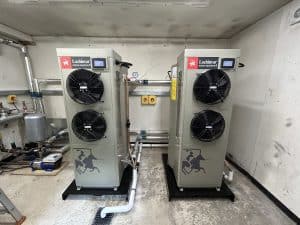
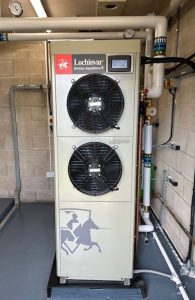
AquaStore differs from many conventional heat pump systems by using heat from the surrounding indoor air. To ensure the highest possible heat pump contribution, installation guidance recommends appropriate plant room volumes and ventilation rates.
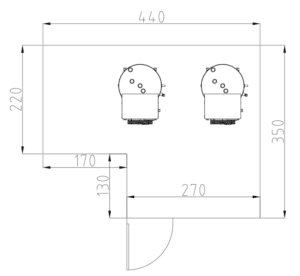
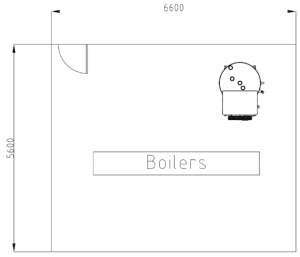
What our site visits revealed, however, is that many installations continue to perform effectively even when these ideal conditions are not fully achieved. Several systems were installed in relatively small plant rooms, while others operated with limited or no dedicated ventilation provision. Despite this, customers consistently reported reliable hot water performance.
This does not mean ventilation is unimportant. Larger, well-ventilated spaces still provide the best conditions for maximising heat pump contribution and overall efficiency. However, the findings demonstrate that AquaStore remains a viable solution in many buildings where traditional assumptions may previously have ruled out a heat pump water heater.
Hot Water Comfort Delivered
Perhaps the most significant outcome from the visits was the consistency of customer feedback.
Across all locations visited, users reported that AquaStore delivered the hot water comfort levels expected from the system. No site reported recurring complaints, inadequate hot water availability or shortcomings in day-to-day operation.
This real-world feedback reinforces the importance of appropriate sizing and application design, while also highlighting the robustness of the technology across a diverse range of building types and usage profiles.
Why 60°C Matters
One of the clearest trends identified from the operating data was the impact of storage temperature setpoints.
Installations operating with a maximum setpoint of 60°C consistently achieved a higher heat pump contribution and reduced reliance on electric immersion heaters. The data showed that increasing the setpoint to 65°C resulted in a noticeably greater share of energy being supplied by electric elements, reducing overall system efficiency.
The explanation is straightforward. Limiting the setpoint to 60°C allows the heat pump to continue operating across a broader range of ambient conditions, reducing the need for electrical backup heating and increasing the amount of useful heat generated by the compressor.
For most applications, the evidence suggests that 60°C represents the optimum balance between efficiency and hot water performance.
Small Plant Rooms Can Still Deliver Big Benefits
Conventional wisdom often assumes that heat pump water heaters require large dedicated spaces to perform effectively.
Our site surveys confirm that larger, well-ventilated rooms remain the ideal solution, particularly where stable temperatures above 10°C can be maintained. Under these conditions, the heat pump provides the highest proportion of the total heating demand and achieves the strongest operating efficiencies.
Yet the data also showed that smaller rooms do not necessarily prevent successful operation.
Where plant room temperatures declined and electric backup heating operated more frequently, overall system efficiency reduced. Nevertheless, performance remained substantially higher than that achievable with direct electric water heating.
For refurbishment projects where space is at a premium, this flexibility could prove particularly valuable.
The Role of Correct Sizing
The survey also reinforced an important principle of heat pump water heating design: correctly matching heat pump capacity to hot water demand remains critical.
When demand significantly exceeds heat pump capacity, electric immersion heaters naturally contribute a greater share of the load. As a result, the system begins to behave more like a conventional electric water heater.
Conversely, where AquaStore was appropriately sized for the demand profile, even hybrid operation produced only a limited impact on overall efficiency while maintaining reliable hot water availability.
This highlights the importance of application-specific design rather than relying solely on storage volume or peak demand assumptions.
More Than Just Hot Water
A number of sites also reported an additional operational benefit.
During warmer months, AquaStore’s extraction of heat from the surrounding air helped reduce temperatures within the plant room itself. In applications where overheating can become an issue, this cooling effect was viewed as a positive secondary benefit.
Key Takeaways
The review of 17 AquaStore installations has led to several important conclusions:
- A maximum storage temperature of 60°C delivers the highest heat pump contribution and minimises electric backup heating.
- Larger, well-ventilated plant rooms remain the optimal installation environment.
- Smaller rooms with limited ventilation can still achieve strong performance and meaningful energy savings.
- Correct sizing is critical to maximising efficiency and reducing reliance on electric elements.
- AquaStore performs effectively both as a standalone water heater and as a pre-heat solution within hybrid systems.
- Customer satisfaction was consistently high across all sites surveyed.
Expanding the Opportunity for Heat Pump Water Heating
Perhaps the most important lesson from this programme of site visits is that real-world operation often proves more flexible than theoretical assumptions suggest.
While best practice design guidance remains essential, the findings indicate that heat pump water heating may be suitable for a broader range of projects than many building owners, consultants and contractors currently realise. Even where plant room space is limited, AquaStore can continue to provide significant efficiency advantages over conventional electric water heating while delivering the hot water comfort occupants expect.
“The most surprising finding was not that AquaStore performs best in ideal conditions, but that it continues to perform successfully in many installations where traditional heat pump assumptions would suggest otherwise.”
Combined with on-site renewable generation such as solar PV, AquaStore also offers an effective means of converting surplus renewable electricity into stored thermal energy. As organisations continue their decarbonisation journey, that capability is becoming increasingly valuable.
After more than 195,000 hours of operation across 17 installations, the message from customers was remarkably consistent: reliable hot water, dependable performance and efficiency gains that make heat pump water heating a practical option for an increasingly wide range of applications.
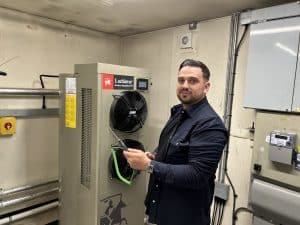
From Data to Real-World Performance
The findings from our 17-site review tell an encouraging story, but what does that look like in an individual installation? Explore our recent visit to Travelodge Covent Garden and see AquaStore in action.
Discover the Travelodge Stonehouse installation – https://lochinvar.ltd.uk/projects/travelodge-stonehouse-demand-led-sizing-of-amicus-aquastore/